


On Oct. 21, PHP shipped emergency patches for two critical flaws, known as PHP2Shell. Exploitation started almost immediately, and security teams had to answer a familiar question fast: where are we running this?
PHP2Shell shows how vulnerability response is changing. AI is speeding up how quickly flaws are found and turned into exploits. The good news is that the same technology can speed up defense too.
With AI agents on their side, security teams can shrink their attack surface before the next disclosure, see their exposure the moment it lands, and hand the repetitive remediation work to automation.
Proactive defense at machine speed
The vulnerabilities behind PHP2Shell can be traced back to PHP 5.4, released in 2012. They went undetected for 14 years. Yet researchers using a frontier AI model were able to reproduce the issue in a single night.
The exploitation timeline was just as striking. According to Cloudflare CEO Matthew Prince, the company observed thousands of exploit attempts before PHP publicly announced the vulnerabilities. Within 45 minutes of disclosure, attempts had climbed into the tens of thousands, reaching millions by the following day.
As soon as the rumors were out, the defenders found themselves facing a rapidly shrinking window to respond.
This is the new challenge for defenders: more vulnerabilities emerging faster, with less time to act.
Glow puts specialized AI agents to work across three stages of defense, helping security teams get ahead of vulnerabilities, understand their exposure, and accelerate remediation.
Before disclosure: Reduce your attack surface
The best time to address the next PHP2Shell is before anyone discovers it.
Unapproved, unnecessary, and outdated software creates exposure that organizations may not even know exists, like a bundled PHP stack left on a laptop long after the project that needed it.
Glow helps security teams continuously reduce this attack surface. Teams define what software is approved, and Glow's agents identify and remove what doesn't belong.
Glow also helps prevent new risks from entering the environment by blocking unvetted or known-vulnerable applications and packages, along with risky browser and IDE extensions.
At disclosure: Know where you’re exposed
The scramble after an advisory starts with figuring out who’s exposed.
PHP2Shell illustrates why that's harder than it sounds. PHP can be bundled into developer environments like XAMPP or Laravel Herd, embedded in third-party applications, or installed under version-specific package names on Linux. Traditional software inventories may miss these instances.
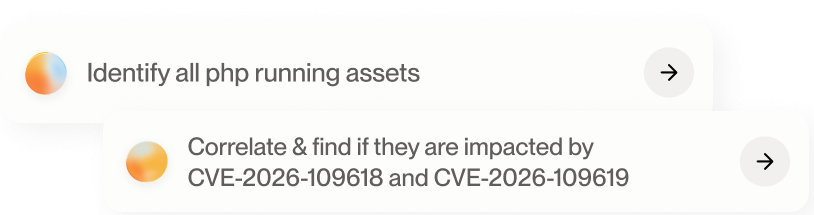
Glow maintains a unified inventory of applications, packages, browser and IDE extensions, MCP servers, and AI tool configurations across endpoints, reconciling data from existing EDR, MDM, identity, and browser tools.
AI research agents investigate unfamiliar software, while threat intelligence identifies vulnerable, malicious, or end-of-life components.
Instead of starting with a hunt across disconnected tools, security teams can quickly identify affected machines, their owners, and what needs attention.
After the disclosure: Remediate at machine speed
Knowing where you're exposed is only useful if you can act on it.
Glow's remediation agents handle the legwork: contacting machine owners through Slack or Teams, creating tickets, preparing fixes, and verifying completed actions.
Not every vulnerability can be patched immediately. Some require compatibility testing, vendor coordination, or scheduled maintenance windows.
Glow helps coordinate these workflows while keeping security teams in control of remediation decisions and approvals. Instead of manually tracking every affected host, teams can focus on exceptions and decisions that require human judgment.
Glow customers are already on it
Glow customers put these capabilities to work immediately following the PHP2Shell disclosure, using Glow’s AI Assistant, Glowy, and remediation agents to identify affected systems and accelerate their response.

One customer used Glowy to discover PHP assets across its environment, correlate them with the affected CVEs, and build an inventory of exposed endpoints, owners, and patchability. The investigation even uncovered PHP bundled inside a building-management system and highlighted how the customer would need to engage with that vendor to ensure they were patching the solution. The entire process took minutes.
Another customer used Glow's remediation agent to plan a PHP upgrade and move the issue into remediation, while Glowy prepared the Jira ticket to track the work.
Customers also used Glow to investigate the Node.js, LiteLLM, and eMudhra security issues disclosed that same week.
This isn't a roadmap. AI-powered defense is already helping enterprises reduce exposure and respond to emerging threats, without relying on manual investigation and remediation alone.
Want to see what’s running across your machines before the next advisory drops? Reach out to AskTheExperts@glow.io about reducing your exposure.